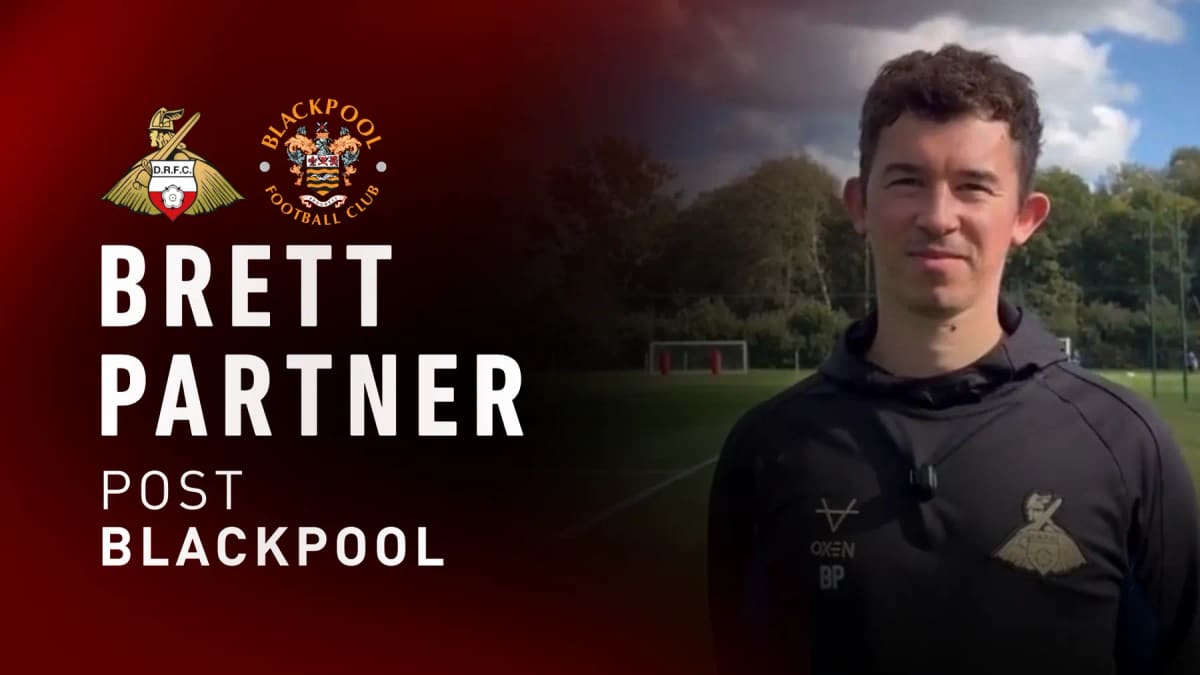
Doncaster Rovers' head of academy player development Brett Partner has emphasised the value of Saturday's Youth Alliance League defeat against Blackpool, citing the learning opportunities the match provided for the club's young players.
The fixture took place at Club Doncaster Sports Village 3G, where Rovers' youth side faced a Blackpool team that included multiple players holding professional contracts. Despite the loss, Partner highlighted a positive second-half response after the team identified areas for improvement at the interval.
Second-half improvement
Partner said: "The reaction in the second-half was a positive one. We went in at half-time and recognised the individual mistakes we made, which is unfortunate in a way, but you have to remember these are 16 and 17-year-old lads."
He praised Blackpool's physical approach and professional standard. "Credit to Blackpool, they were very physical and had a few pros in there as well, so it was a good test for us in terms of going, 'this is the standard we need to get to'," Partner explained.
Rovers' second-half performance proved tighter, with the team creating multiple chances after making adjustments to their approach.
Young frontline experience
The match provided valuable experience for a particularly young attacking line featuring Charlie Pinder, Rohan Chabvonga, and Dylan Hartley — with two of the three U16 players.
Partner stressed the importance of development over immediate results: "Games like this involve lots of learning opportunities. We're not expecting to win every single game; ideally, that would be great, but perhaps it's more about the development and how we can get these players making better decisions."
He added: "To make better decisions, they've got to make mistakes and they've got to learn from them. It's all about development and why these players are here, because we want to get them to the first-team."
Work rate and learning
Partner commended the overall effort from the young group, particularly the front three, though he noted they must learn when to apply their energy effectively.
"I think the whole team, like I always ask, the non-negotiables are that you work hard, if you wear the Doncaster badge you work hard, you play with intensity and you try to be creative," Partner said. "The effort was great and the second-half it was probably even better than the first-half. There's a lot of running there, so they've just got to learn when to run and when not to run at times."
Four of the goals conceded came from individual errors, and Partner stressed the importance of players taking ownership of their own development as they return to training and reflect on the match.